.avif)

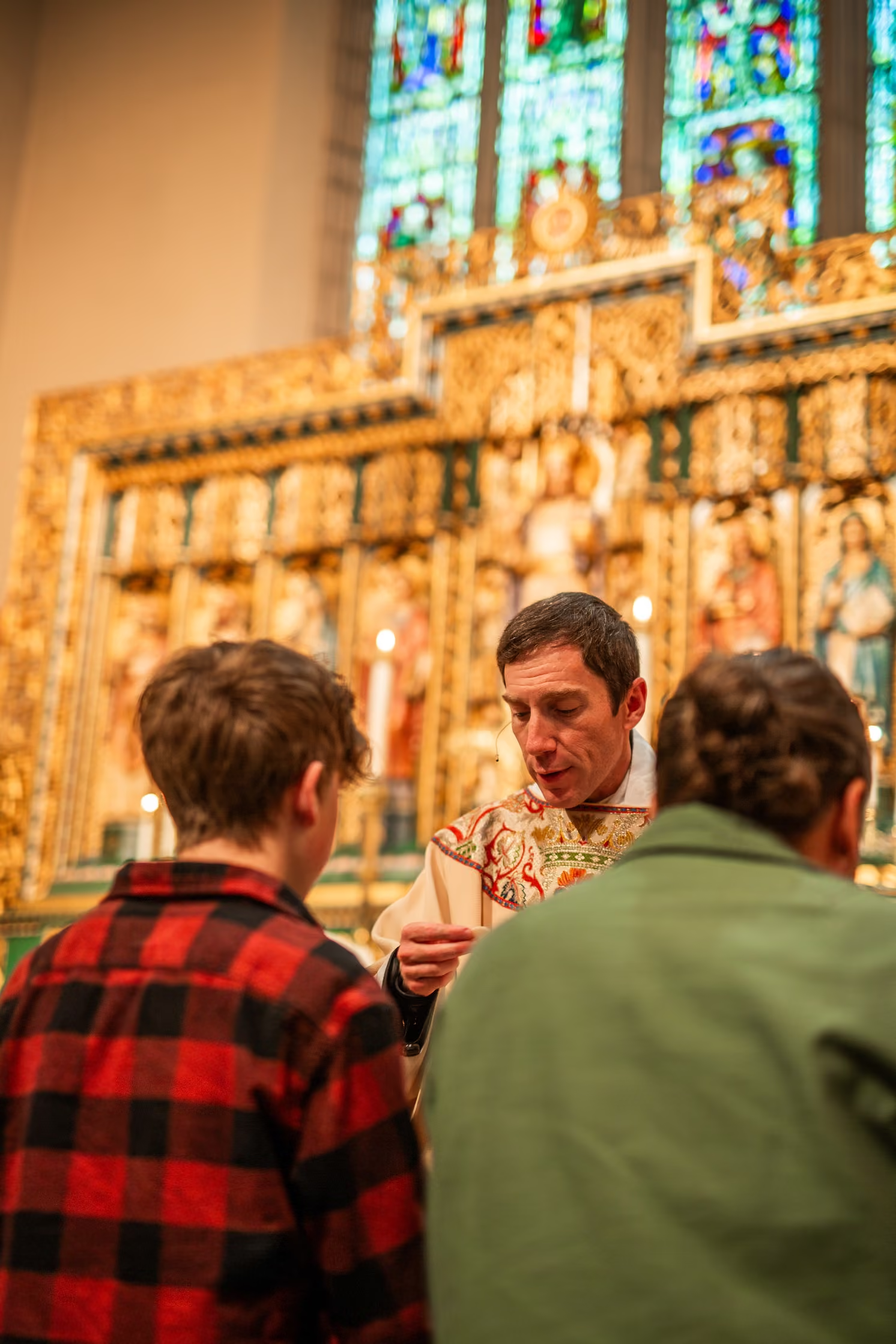
Sacred Scripture tells us that God is worshipped by song and music. We, therefore, take pride in our renowned music program, which helps us to lift our voices in praise to the Holy Trinity. In 1928, Alice Bemis Taylor gifted the Taylor Memorial Organ to the city of Colorado Springs, to be housed at Grace & Saint Stephen’s. Sacred music has always been a part of both our identity and witness as a parish. Our music program features some of the finest music in the Anglican choral tradition, as well as many other styles, sung by our choirs and ensembles of all ages.
For more information about how to support and be a part of the Music Ministry, contact our Director of Music Ministry.
Music is at the heart of our worship at Grace and Saint Stephen’s—from the hymns we sing together to our renowned choirs, accompanied by our magnificent, historic organ. All are welcome to participate in our music as an offering of love and service to Our Lord Jesus Christ.
We strive for the highest quality in liturgy and music, seeking to touch the heart and renew the spirit. Our Saint Nicholas Choir, open to all students in 2nd through 8th grade without audition, receives training in music theory from the curriculum of the Royal School of Church Music and rehearses on a weekday evening with a break and dinner provided. Our Taylor Choir, open to youth and adults through audition, rehearses weekly and sings in our choral Holy Eucharist, Evensongs, and occasional concerts.
Alice Bemis Taylor’s gift in 1928 of our organ—crafted with over 4,000 individual pipes—and endowment in memory of her husband, Frederick Morgan Taylor, allows us to present world-class organists, singers, ensembles, and choirs in concerts and services free to the public.
Services of Anglican Evensong are sung quarterly by the Taylor Choir accompanied by the Taylor Memorial Organ, and the Anglican evening service of Compline is sung by candlelight on the last Sunday of the month between September and May by our Compline Choir.
During the summer, we host free bi-weekly concerts featuring some of the best jazz musicians in the Pikes Peak region, who perform in our garden at the corner of Monument and Tejon.

Christianity is rooted in history. Its genesis dates from an identifiable time and place with the entrance of a unique person, Jesus Christ, sent from God into the human realm. Grace & Saint Stephen’s is a member of the community of believers which spans over 2,000 years of Christian history.
Grace & Saint Stephen’s is a member of The Episcopal Church, founded in 1789 during the tumultuous post-revolutionary decade which also saw the drafting and ratification of the Constitution of the United States. As a member of the Anglican Communion, we are rooted in the historical, liturgical, and theological lineage of British Christianity.
Episcopal churches in Colorado Springs have closely aligned with the history of the city since its founding in 1872 and the State of Colorado since statehood in 1876. Grace & Saint Stephen’s, formed from the merging of two parishes in 1923, launched several mission churches around the city in the mid-twentieth century. Every night downtown, our brightly-lit Gothic Revival tower draws the eye upward with a sense of awe.
A timeline of Grace & Saint Stephen's from 1873 to today.
.avif)
William Jackson Palmer—Union Army general, railroad builder, and founder of Colorado Springs—gave land for the city’s first Episcopal church. His Civil War friends, New York and British financiers, and East Coast Episcopal visionaries established Grace Church in 1873 on Pikes Peak Avenue, the center of the new community.
.avif)
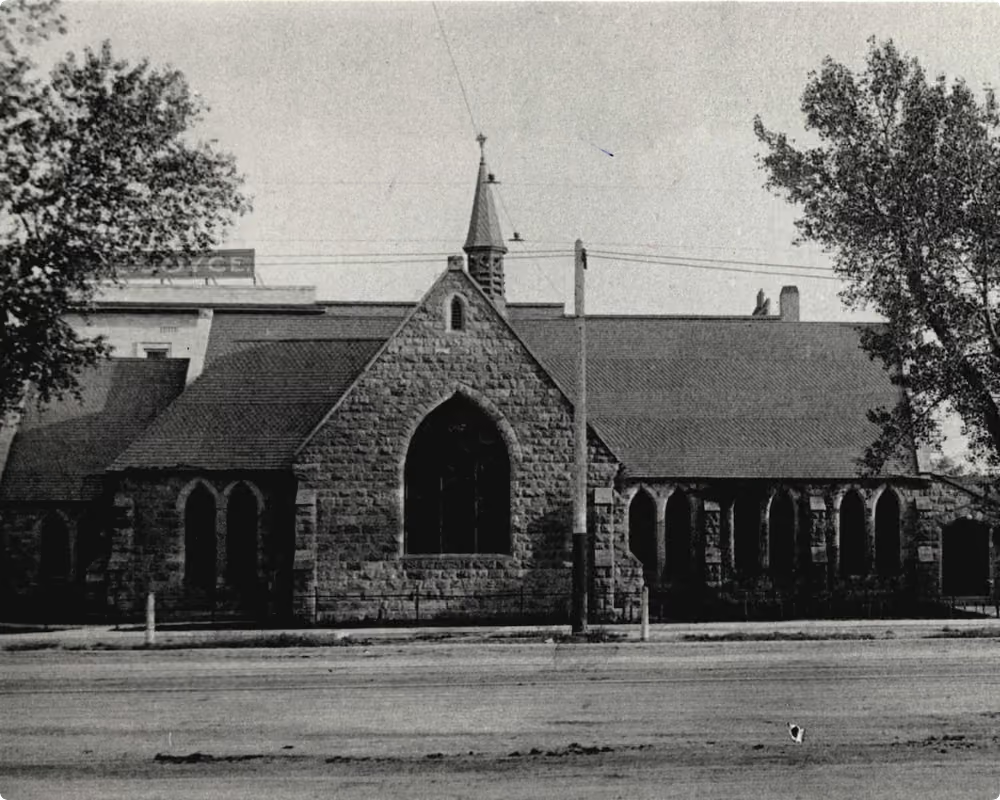
Mining engineers, railroad workers, and supporting business entrepreneurs established Saint Stephen’s Parish in 1893, seeking a less formal or “low” church form of worship. Cripple Creek mine owner J.J. Hagerman gave the land and prolific Scottish architect Thomas MacLaren designed the church with stone from a nearby Castle Rock quarry.
.avif)
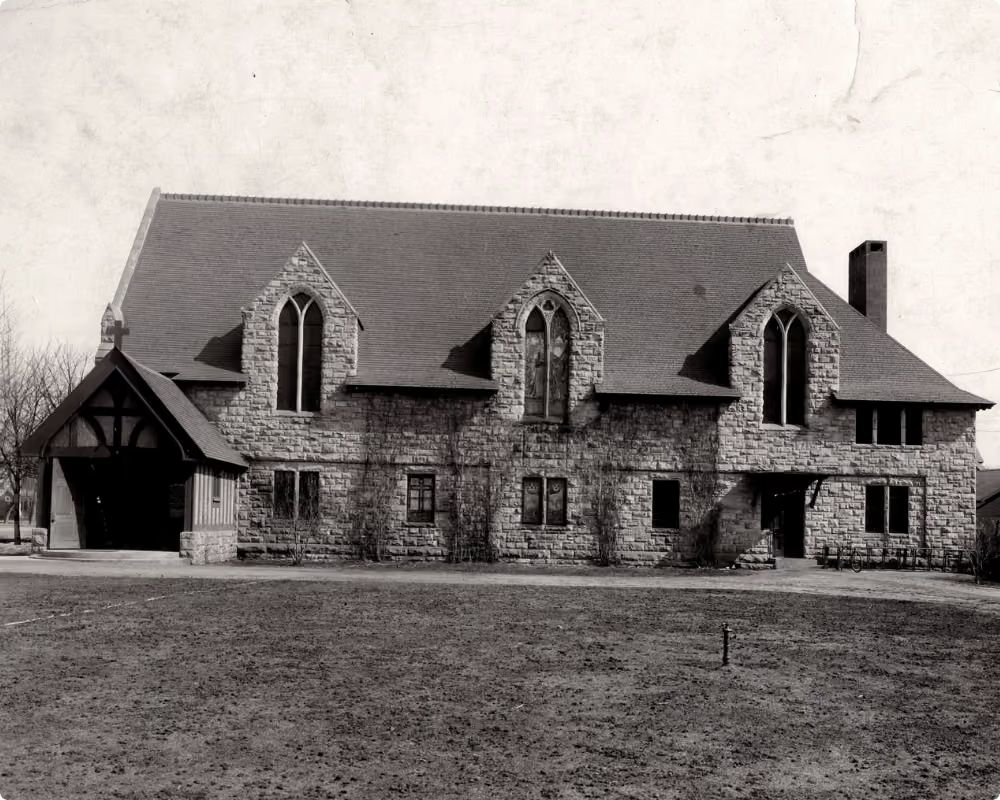
Grace Church and Saint Stephen’s Parish merged in 1923 and engaged Boston architect, E. Donald Robb, to design our Gothic Revival church. Civic leader and Rector, the Rev. Arthur N. Taft, led the founding of the Red Cross, the Community Chest, the Visiting Nurse Association, the TB Association, and Sunnyrest Sanitorium.
.avif)
.avif)
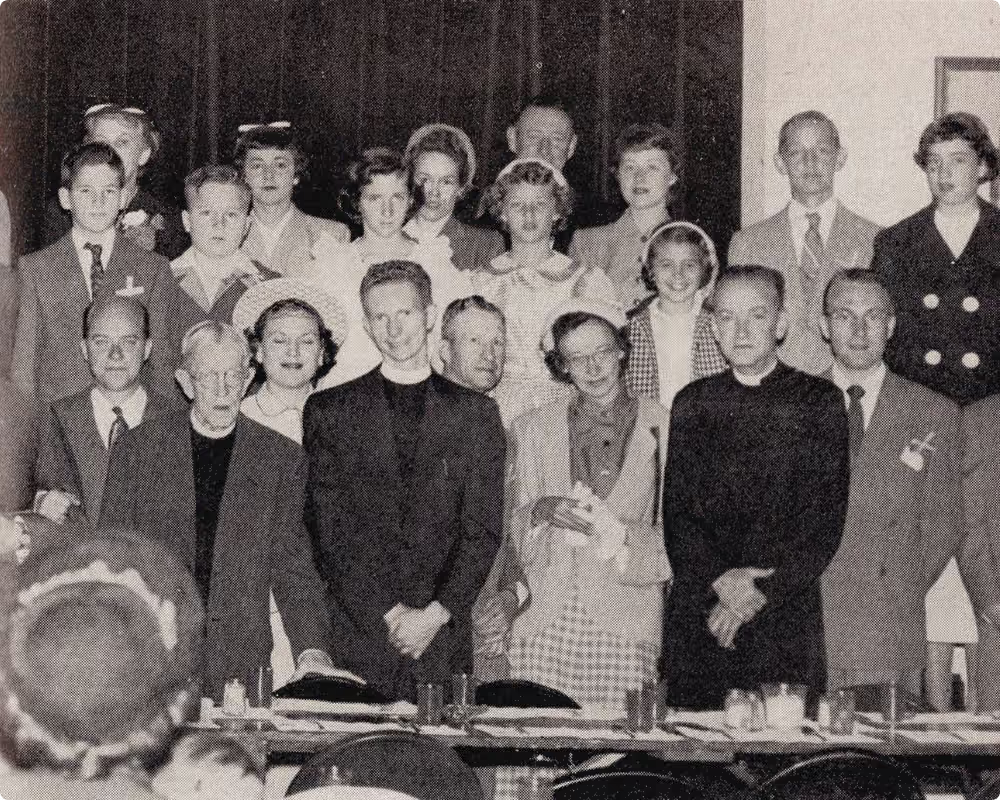
Grace & Saint Stephen’s burgeoning membership—as seen in a 1953 confirmation class of 53 believers—led to the construction of the Education wing, the addition to the parish of the African American Epiphany Mission, and the establishment of three other missions: Chapel of Our Saviour, Holy Spirit, and Saint Michael the Archangel.
.avif)
The 1985 production of Benjamin Britten’s operetta Noye’s Fludde included the Saint Nicholas children’s choir and Taylor adult choir. It represents the musical tradition initiated by the 1927 gift of the Welte organ and the free Taylor Concerts endowment, continuing with the 2022 antiphonal gift.
.avif)
.avif)
The 2011 book, The Windows of Grace and St. Stephen’s Episcopal Church, reproduces images of the 48 radiant stained glass windows designed from 1899 to 2005 by nine renowned stained glass window artists from the United Kingdom, the East Coast, and Nebraska. They portray the life of Christ and of His Church.
.avif)
.avif)
The 2023 Centennial Celebration of Grace & Saint Stephen’s fulfilled its guiding prayer to “create renewed hearts that can dream of a future as bright and generous as our past.” The September 17 Birthday Fete welcomed Colorado Bishop Kym Lucas and premiered the Centennial hymn, “At This Holy Banquet Feast.”
.avif)
Upon entering Grace & Saint Stephen’s, you see all around you material objects such as stained glass windows, stone carvings, decorated ceilings, and altars. These are examples of visual theology, that is, objects with religious meaning that we can see and often touch. Theology is the study of the nature of God and religious belief, and these carvings, paintings, and pieces of colored glass give us theological clues and make our worship more meaningful.
We see these objects best when there is light. Our Gothic Revival building itself, whose windows admit generous Colorado sunshine, exemplifies the belief that light is a manifestation of God connecting the physical and spiritual worlds. Stone masons built the church in the shape of a cross, the most recognized symbol in Christianity and a clear example of visual theology. The Rev. Arthur Taft called it “a sacrament in stone, conveying God to the soul.”

The Old Testament History of Israel stained glass window tells the story of the people of God from Moses to Elijah. The window, whose artist included a church mouse at the bottom of the central lancet, lies high in the welcoming entrance to the church called the narthex.
Saint Peter was the spokesman among the twelve disciples called by Jesus at the beginning of his three-year ministry. An Italian artist painted Peter in the colorful screen, called a reredos, located behind the main altar. Peter carries keys, symbolic of the authority to establish the Church. We stand in this apostolic tradition and faith.
The marble baptismal font has both functional and symbolic roles. It holds the water used for Baptism, the first step in joining the Church. It is placed near the entrance of the church, symbolizing the beginning of a spiritual journey and the welcome by the parish community.
A wood craftsman carved a familiar image of Christ on the front of the high desk or lectern located on the north side of the three steps leading to the choir area. Selections from sacred Scripture are read, during services, by members of the congregation.
Saint Stephen was the first Christian martyr. His statue stands above the tower door entrance on the north side of the church. He wears the traditional robe of a deacon and carries a book, representing his preaching, on top of which lie stones by which he was slain.
The symbols for Alpha and Omega are emblazoned atop the main altar screen or reredos. These initials of the first and last letters of the Greek alphabet signify God’s existence from beginning to end. In the Book of Revelation, Christ also claims the Alpha and Omega, thereby asserting his divinity.
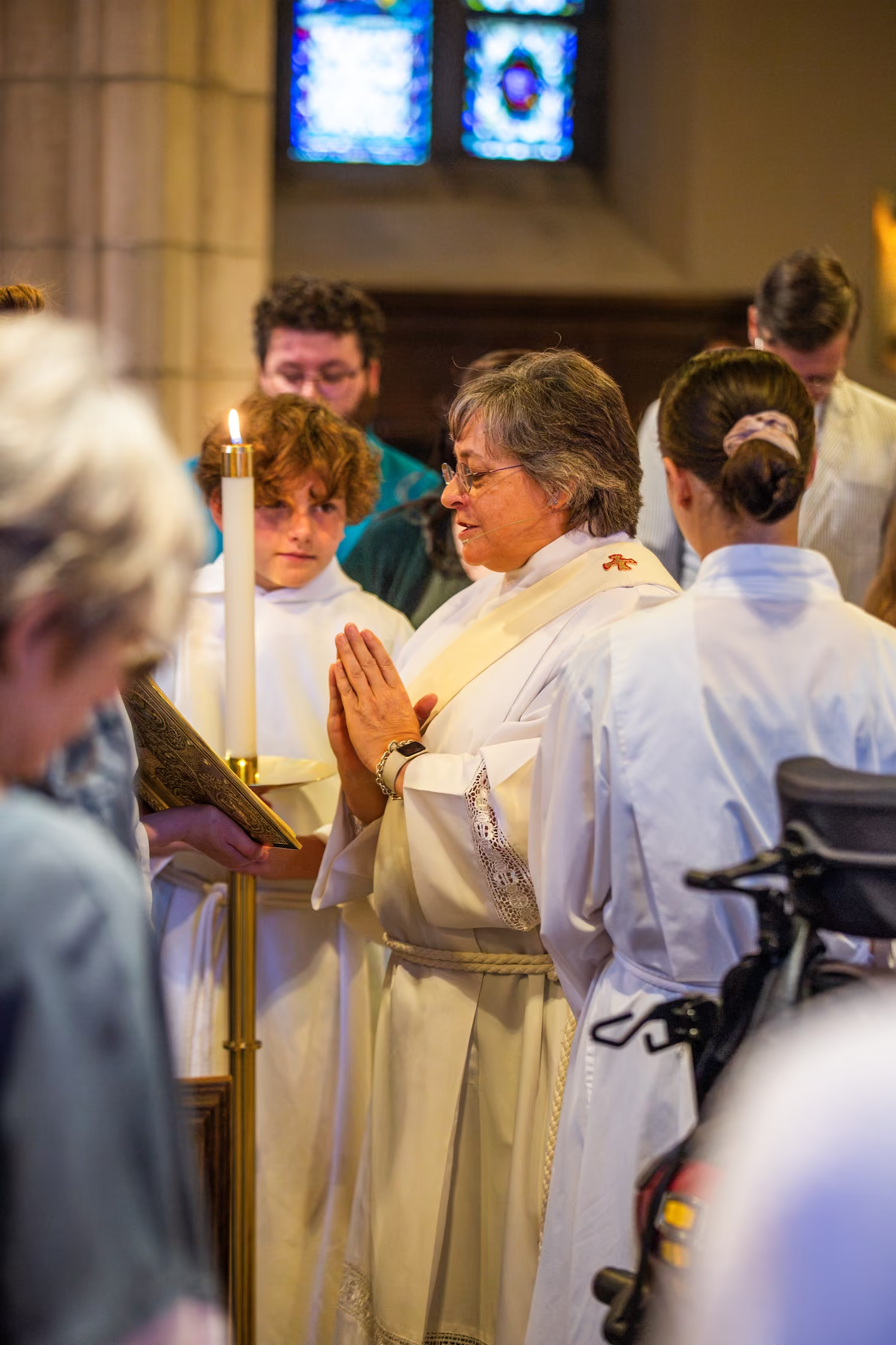
The beautiful language and ancient wisdom of the Book of Common Prayer—known affectionately as the BCP—orders our liturgical worship, ceremonies, and personal devotions. For instance, the BCP includes rites for the proper celebration of Holy Eucharist, the entire Book of Psalms to orient us in praise, and structures for Morning and Evening Prayer—a daily practice encouraged for all. The BCP has been central to the Anglican tradition for nearly 500 years since the first edition in 1549, largely composed and compiled by the brilliant Thomas Cranmer, the Archbishop of Canterbury. But the roots of BCP liturgies are much older, expressing structures for worship and ceremonial established early in the history of Christianity and developed by believers over the centuries.
We recognize and practice the historic sacraments of the Church. These include Baptism and Confirmation, key rituals of initiation into the faith, and Holy Eucharist—the source and summit of our lives as Christians. When needed or desired, Confession and Anointing of the Sick are also provided by our ordained clergy, as are the sacrament of Marriage and funeral rites. You will find customaries for Baptism, weddings, and funerals here. Please be in contact with our Rector, Father Robert, for more information about the sacraments.